Adrian Jacobs, Ganosono (Deer Lodge) of the Turtle Clan, Cayuga Nation of the Six Nations Haudenosaunee Community along the Grand River, Southern Ontario.
A most promising possibility for a tangible response by churches to past injustice in the Six Nations Grand River lands conflict came from a conversation I had after the monthly meeting of the Haudenosaunee Council at Onondaga Longhouse on Saturday, March 3rd, 2007.
At this meeting Mennonite Central Committee Ontario introduced me as Community Liaison for the Aboriginal Neighbours South Program. I explained to the Council my plans to educate the churches about our Six Nations lands. After this meeting I sat across the dining hall table from Rick Hill, a Tuscarora man, artist, and Haudenosaunee knowledge keeper.
Rick asked me, “Do the churches pay taxes?” I knew he was referring to property taxes, and I said, “No.” He replied, “Good. Then they are not part of the system.”
He then surprised me by saying, “Wouldn’t it be great if Six Nations could have a spiritual covenant with the churches? They could acknowledge Six Nations jurisdiction over their lands and pay a token lease payment. They could continue their spiritual work and if they ever de-commissioned, the land could revert back to Six Nations.”
This conversation was burned into my memory, and I have tried to foster this dialogue ever since.
This spiritual covenant could be made in the same spirit as the original treaties recorded in wampum belts by the Haudenosaunee traditional community. Six Nations original intention to lease their excess lands in the Haldimand Tract could also be fulfilled and the historic land injustice could be partially corrected. The church could lead the way in a courageous act of justice and be the conscience of Canada to pressure the government to follow suit for more fulsome reparations.
Discussions began about this matter and there is real interest on the part of the individual pastors and church members and Christian organization leaders. The challenge will be for the churches and organizations to build consensus to get their people in agreement with what Rick called “A Spiritual Covenant with Churches.”
Homeowners have also responded to this proposal by asking, “What if a thousand (also “a hundred”) of us homeowners had a spiritual covenant with Six Nations and paid a lease payment to Six Nations?” Because homes are embedded in the property tax system there are more legal and financial hurdles to this homeowner proposal, but where there is a will there is a way.
The deep problem is with the willingness of the powers-that-be to allow or make this happen. Six Nations stands ready to receive a just recompense. The colonial land title system, on the other hand, is resilient against the changes Indigenous justice demands. The colonial governments also do not want to lose power or tax monies. Church lawyers are reticent as well. The call to the churches is to be the conscience of Canada and not the chaplains of empire.
When I shared this Spiritual Covenant with Churches in cities across Canada people have come up to me asking, “How can we do this here?”
My response has always been, “Find the closest Indigenous community to your church and begin dialogue.”
In Winnipeg there are four urban First Nations Reserves. City churches can work with the closest urban or rural reserves. Reparations can happen anywhere in Canada if there is a heart for real relationship and tangible justice. Indigenous people want more than “land acknowledgements” that mean nothing tangible to them.
Apologizing for what Canadians and churches have done to Indigenous people is not enough. Canada’s Truth and Reconciliation Commission has 94 Calls to Action! The Final Report on Missing and Murdered Indigenous Women and Girls has 231 Calls for Justice!
Authentic Christian repentance is of the heart, the head, and the feet! The Apostle James said, “But how can I see your faith apart from your actions? Instead, I’ll show you my faith by putting it into practice in faithful action.” (James 2:18b Common English Bible)
Preamble to A Spiritual Covenant with Churches
There are background Haudenosaunee ideas and elements that underlie this Covenant. To fully understand them they are briefly affirmed in this preamble. The story begins a long time ago. Our elders and leaders made decisions seven generations ago that were good for us today. We must make decisions now that will benefit our great, great, great, great, great grandchildren.
Two Row Wampum – A Covenant of Friendship and Mutual Respect

Two Row Wampum belt depicts an agreement of peace and respect between the Haudenosaunee and other Euro nations – at first the Dutch and then the British. Canada now bears responsibility for upholding the “honour of the crown” in this ancient covenant.
In 1613 C.E. Dutch merchant traders sailed up the Hudson River (present day New York State, USA) and encountered Kanien’kehà:ka (Mohawk) people of the Haudenosaunee Confederacy. The Dutch were looking for trade items that they could take back to Europe, sell at a profit to pay their shipping and crew costs, repay their bank loans and return a profit to their investors. The Haudenosaunee were looking to establish friendship. In the long run the Dutch (and their European successors) made their huge profits and the Haudenosaunee lost almost everything.
The negotiations that established the relationship between the Dutch and the Haudenosaunee were recorded by both sides in different languages and ways and in very different spirits. The Dutch wrote their understanding down on paper. The Haudenosaunee made a wampum belt to record their agreement. As differing were the languages and means of recording are the differing meanings of the relationship.
The belt was made with a background of white wampum beads with two rows of purple that run parallel from one end to the other. The background of white beads represents the common river of life and the two parallel rows of purple beads represent two vessels traveling the river. The river is large enough for the two vessels to travel down together. In one vessel are the Haudenosaunee with their laws, their leaders and their people. In the other vessel are the Euro nations with their laws, their leaders and their people.
It is the responsibility of the people in each vessel to steer their vessel. Neither the Euro nation nor the Haudenosaunee are to interfere with the other’s vessel. Neither side shall attempt to bring their laws into the other’s vessels, or exercise leadership over the other. This is the agreement of mutual respect that is recorded in the Two Row Wampum.
The Haudenosaunee have used the principles of the Two Row Wampum as the guide for relations between themselves and other nations. They have been careful to abide by the concept that was developed so long ago and each succeeding generation is taught the importance of maintaining the principles of the Two Row Wampum.
Dish with One Spoon
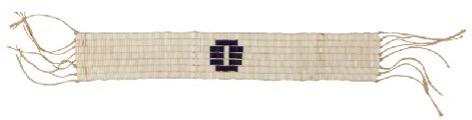
Southern Ontario, Ohio, Michigan and Indiana was the area covered by the 1701 Nanfan Treaty or as it is remembered in oral history The Dish with One Spoon. Haudenosaunee, Anishinaabe and British people were permitted to eat from the one dish of the land with one equitable spoon of access. All of southern Ontario was Haudenosaunee beaver hunting grounds (the economic engine of those days) and remains so today. The Canadian churches relationship with Six Nations can be renewed in this spiritual covenant. That was Joseph Brant’s original desire to have good neighbours living by us. We looked to share the land and all that it provided.
Tuscarora Admission Belt
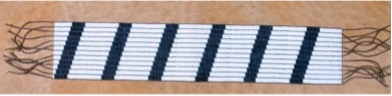
When the Tuscarora Nation was adopted into the Five Nations Confederacy making it the Six Nations Haudenosaunee Confederacy the Tuscarora Admission Belt was made to remember and commemorate this. In one version of a wampum belt there is a small rafter in the corner that represents the newcomers who are now here for the future. Canadians are included in this rafter extension of this belt.
Silver Covenant Chain
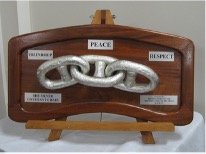
The Silver Covenant Chain is to be shined up from time to time since it tarnishes. In New Zealand the Queen apologized for the colonial treatment of Maori. Canada apologized to survivors of the Indian Residential School system and its Policy of Assimilation. Each of these occasions were opportunities to renew this covenantal relationship. The Calls to Action of the Final Report of Canada’s Truth and Reconciliation Commission report and adopting and implementing the United Nations Declaration on the Rights of Indigenous People is this generation’s Kairos moment to return to the original spirit and intent of the treaties.
A Paradigmatic Story
The story is told of a Mennonite farmer who came to the Six Nations people near Brantford in the early years after Mennonites moved to the Grand River Valley land of Six Nations. He brought with him his lease payment for his lands in the Waterloo area. The Six Nations representative asked the farmer how the season was and the farmer replied that it had been difficult. He was asked if he had seed for next year and grain for bread. The farmer said, “No. All I have is this lease payment of grain.” Mennonites are remembered by Six Nations as hard-working people of their word. The Six Nations representative said, “Take this back for bread for your family and seed for next year. You can make it up when you have a better harvest.”
When I told this story recently to a Six Nations person after they learned of the Mennonite concern for justice he said, “Are they coming to settle- up?”
Injustice Concerning Land and Trust Monies
British, colonial and Canadian officials bear fiduciary responsibilities through their insistence on overseeing Six Nations lands and trust monies. The Haudenosaunee Confederacy Council continues an ongoing dispute with Canada concerning its handling of the land and trust monies and has negotiated with Canada to address these conflicts but they remain unresolved.
Six Nations Elected Council initiated a lawsuit in 1995 asking the Government of Canada to account to Six Nations for the original 950,000 acres set aside for Six Nations in Governor Haldimand’s Proclamation of 1784. These lands are six miles on either side of the Grand River from its mouth at Lake Erie to it source near Dundalk, ON. Our Six Nations trust accounts should contain trillions of dollars.
To this date Canada has not disclosed its accounting of these matters. Canadian officials have admitted the historical record indicates deficiencies in Canada’s fiduciary duties. The church signatories to this covenant could be voices of conscience appealing to Canada to rectify this inequity. Apologies are meaningless if there are no tangible actions to correct the historical wrong. Reparations are needed and not simply empty words.
The Christian Church and Peace and Justice
The Christian church has had opportunity to gain greater understanding of the historic injustice surrounding the Six Nations land claim conflict with Canada in the Haldimand Proclamation lands. The community conscience exists to do something toward an equitable and fair resolution of Six Nations grievances.
It is unfortunate that so many churches remain oblivious to the need to become involved in this important matter. Historical education and an appeal to Christian conscience is an ongoing need.
It was a broad movement of conscience led by a William Wilberforce, Christian politician, that paved the way to the abolishing of slavery in England in the early 1800’s.
It was a broad movement of conscience led by Martin Luther King Jr., a Baptist minister, that confronted segregation and civil rights abuses in the 1950’s and 60’s in the US south.
It was a broad international movement of conscience led in part by Anglican Bishop Desmond Tutu that confronted apartheid in South Africa.
Roy Hawkins is the pastor of the Caledonia Baptist Church which is adjacent to the disputed lands in Caledonia, ON. The development was called Douglas Creek Estates by the developers and Kahnostaton (the Protected Place) by Mohawk land defenders.
Pastor Roy suggested that it will take a broad movement of conscience to move Canada to equitably deal with Native land issues. This Covenant is a conscientious response to the call for justice and peace.
The Spiritual Covenant Developed with Dialogue
The conversation I then had with the church communities I shared this Spiritual Covenant with were intrigued by the possibilities for just action that it represented.
As we dialogued we expanded the developed Rick’s idea further. Rick had experience with establishing a Joint Management Board in the Red Hill Expressway environmental protest and this solution could answer some legal questions. The churches offered ideas as well. The following is the state of the conversation of what the Spiritual Covenant looks like so far:
Six Nations (other First Nation) Spiritual Covenant with Churches
It is affirmed that Six Nations (other First Nation) and the Churches do enter into a Spiritual Covenant with the following commitments:
- The Church acknowledges Six Nation’s (other First Nation) interest in the land, based upon the 1701 Nanfan Hunting Lands (Dish with One Spoon) Treaty and/or Haldimand Proclamation of 1784 (or other First Nation Treaty).
- The Church undertakes a token 99-year ‘lease’ payment annually as a goodwill gesture and Six Nations (other First Nation) will permit the churches to continue to use the lands in question for their spiritual work. The covenant may be renewed upon mutual agreement at the expiration of the original and/or subsequent 99-year term.
- If, and when the church is decommissioned, the land will revert to Six Nations (other First Nation) possession as a reconciliation act by the Church with Six Nations’ (other First Nation’s) assurances the land would be used for spiritual/cultural/social/community purposes and not for individual economic purposes.
- A joint management board may hold the property “in trust” for Six Nations (other First Nation). This will be an interim measure until the lands can be fully returned to Six Nations (other First Nation) Reserve status.
- The decommissioned church may become an educational centre promoting the history and context of Six Nations (other First Nation) land stewardship of the Grand River tract outlined in the Haldimand Proclamation (or traditional territory).
Date _______________
For Six Nations (other First Nation) _______________
For the Church _______________
Land description (including acreage) _______________
Lease payment _______________
This agreement would fulfill the original intentions of First Nations people to share the land entrusted to them by Creator, to have good neighbours, and to honour the spirituality of both newcomer and Haudenosaunee peoples, as in the Two Row Wampum. This conversation remains a living one with church groups inquiring into how this may inform their discussions in pursuing just relations with Indigenous communities. One pilot church could break through the log jam of resistance and open a flood gate of tangible reconciliation. The church could be the pressure of conscience that exerts itself among the powers of this world to do more than offer empty apologies for past injustice and impotent efforts to make things right.
A Spiritual Covenant with Churches and First Nations
© 2022 by Adrian Jacobs, Manitoba, Turtle Island (Canada)